 Pachat.ai

AI Agent Handoff: What It Is and How to Make It Stick
Updated 2026-11
TL;DR: An AI agent handoff is the moment one agent passes a task, and the context behind it, to another agent or to a person. In the OpenAI Agents SDK docs, checked on 2026-11-25, a handoff is a tool such as transfer_to_refund_agent, and the new agent sees the full prior conversation unless you filter it. Most multi-agent failures happen at this step, so write down the trigger, context, allowed action, reviewer and evidence before you connect the next agent.
What Is an AI Agent Handoff?
An AI agent handoff is the step where one agent stops and another agent, or a human, picks up the same piece of work. The OpenAI Agents SDK docs, checked on 2026-11-25, put it in 1 line: "Handoffs allow an agent to delegate tasks to another agent." A triage agent might hand a billing question to a billing agent and a refund to a refund agent. The receiving agent takes over the conversation from there, so what it is told at that moment decides whether the work continues or starts over.
An insurance software team explained the idea in a September 2026 video. Insurance AI tools can run a process. The problem is almost nothing in insurance is a single process. For example, at submission intake, an underwriting assistant gets to it first. It processes documents, clears it, checks appetite, all the groundwork to prep the submission. And when that's completed, it's not the finish line. That's the trigger that puts the file on the underwriter's desk where the real call gets made.
That's a relay, not a sprint. But single threaded tools can run one leg of the race, and they struggle at the handoff. That creates a broken system where a person ends up in the middle carrying the work from step to step by hand.
For the basics of what an agent is, see what is an AI agent.
Why Work Breaks at the AI Agent Handoff
The main reason work breaks at the handoff is that the next agent rarely gets what the last one knew. In an October 2026 breakdown of a coding tool launch, a reviewer described the pattern in 3 steps. Every new coding chat comes with a hidden tax. You explain the project again, point the agent at the right files, and remember what the last agent already tried. Projects that run longer than one chat are aimed at that handoff problem: one ongoing conversation coordinates the work behind the scenes.
The key distinction is the coordinator. This agent directs other agents instead of writing the code itself. That matters because a worker can be busy implementing a change while the coordinator stays available for your next instruction. Think about asking for a feature, then changing a requirement halfway through. You keep directing the project through the same thread instead of juggling a separate conversation for every task.
Shared context is the other piece. Files can include research plans, generated artifacts and lessons about the codebase. If an agent discovers the right way to test a service, future agents can reuse that information. The useful idea is continuity: decisions and working knowledge can travel with the project instead of staying trapped in one conversation.
Remembering more is useful only when the remembered information is still correct.
A stale setup instruction can send several agents in the wrong direction. For a real team, keep project notes specific, review important assumptions, and update instructions when the architecture changes. Shared memory can reduce repeated explanation. It does not replace ownership of the decisions stored inside it.
How AI Agent Handoffs Work in the OpenAI Agents SDK
AI agent handoffs in the OpenAI Agents SDK are represented as tools the model can call. The handoffs page, checked on 2026-11-25, says a handoff to an agent named Refund Agent becomes a tool called transfer_to_refund_agent, and you set it up by listing agents in a handoffs parameter. When the handoff fires, the new agent takes over and sees the entire previous conversation history by default. The docs also say handoffs stay within a single run, and suggest a recommended prompt prefix so models understand how handoffs work.
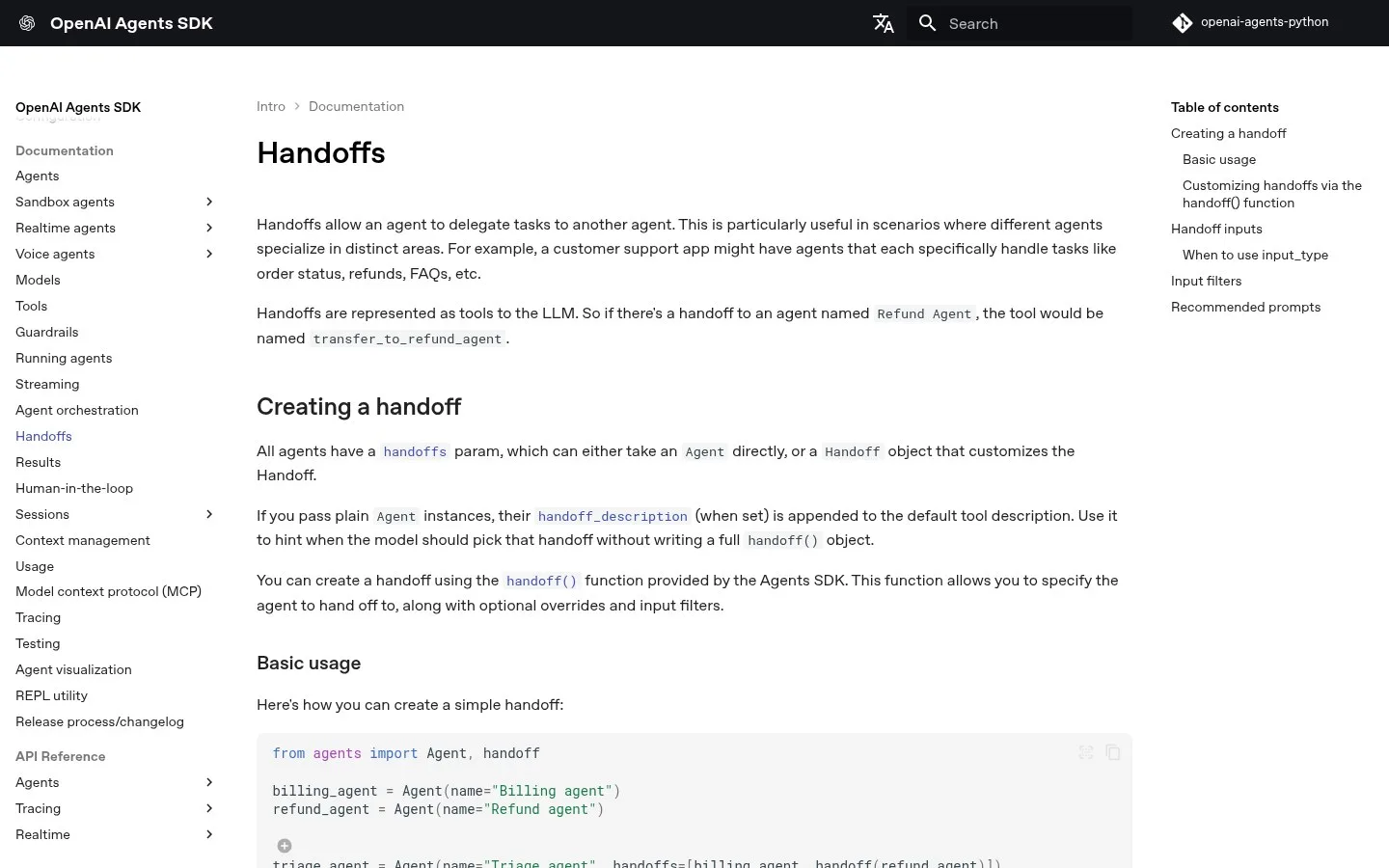
Screenshot of the Handoffs page in the OpenAI Agents SDK docs, 2026-11-25.
| SDK option | What it does |
|---|---|
handoffs=[billing_agent, handoff(refund_agent)] | Lists the agents this agent can hand off to |
tool_name_override / tool_description_override | Renames or rewrites the handoff tool the model sees |
on_handoff | Callback that runs when the handoff is invoked |
input_type | Lets the model pass small metadata such as reason, language, priority or summary |
input_filter | Changes what history the next agent receives |
is_enabled | Turns a handoff on or off at runtime |
Other frameworks use the same pattern with different names. In a September 2026 developer demo, two engineers built 3 agents in Google's Agent Development Kit: a root agent, an updater agent and a critic agent. The root agent is a generalist and a router, and the updater agent is more of a specialized agent. It specializes in updating the blog post according to the input it's getting, like make it more conversational. The last agent is the critic agent. It's good at spotting things that can be improved in the current draft.
Each agent knows its prompt and what to call its output. Where are those output keys used? They're how the agents pass information to each other. For example, the critic agent saves its suggestions to an output key, and the updater agent's prompt incorporates that output. It's how they collaborate. In the test interface, you can see which agents are called. This is useful for debugging: you can see which agents did what.
The session matters too. Without that session, the agent would have no idea that "item 2" meant start the blog post with a better hook. That state and memory is important for natural conversations. For more frameworks, compare these AI agent orchestration tools.
How to Design an AI Agent Handoff: The Handoff Card
A handoff card is a short note that says what starts the handoff, what the next agent may see and do, and who checks the result. In a May 2026 daily AI briefing for business owners, the tip of the day was exactly this. Create a workflow handoff card before adding an agent: trigger, context source, allowed action, reviewer and evidence. Choose one repeatable workflow and document the handoff card before connecting the next AI tool or agent.
| Field | Question it answers | Example |
|---|---|---|
| Trigger | What starts the handoff? | Intake agent finishes the document check |
| Context source | What does the next agent read? | The submission file and the intake notes |
| Allowed action | What may it do, and what not? | Draft terms, never send them |
| Reviewer | Who signs off? | The underwriter who owns the decision |
| Evidence | What proves it worked? | Links to the checked documents |
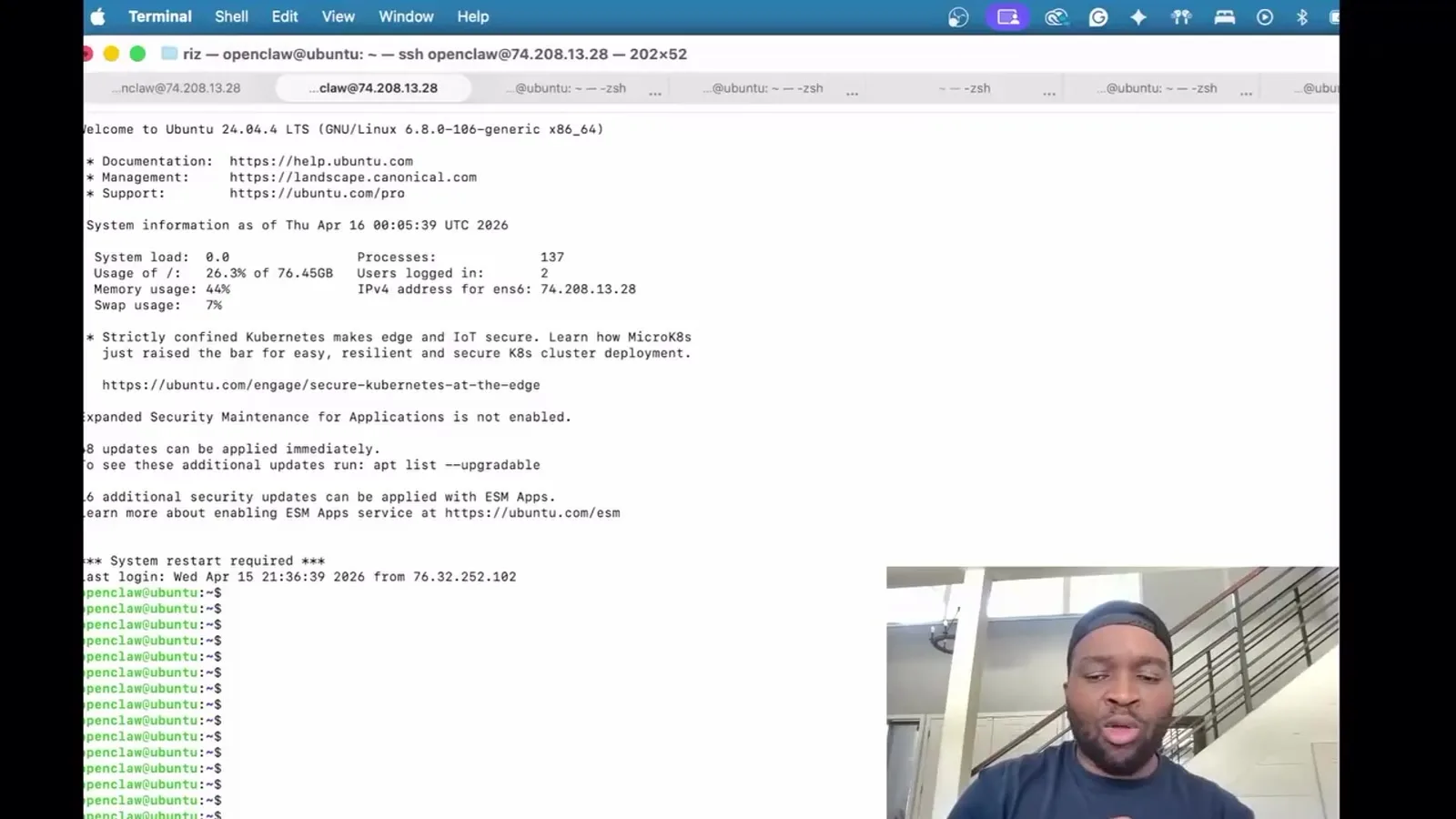
A loop makes handoffs repeat. In a March 2026 clip, a solo builder running agents on a Mac Mini described what he calls the agent handoff loop. You have your main agent that you talk to, your CEO or your assistant, who creates the strategy and assigns every single agent, based on their skills, to a specific task. When the agent completes a task, it notifies that person, and that next thing gets handed off to the next agent. So it's a constant loop.
The handoff can even be spoken. In a June 2026 demo, a developer ran two coding windows by voice: "Alpha, read the documents in the docs directory and create a to-do list." Then: "Alpha, pass your task to Bravo."
Long jobs need a written handoff at the end, too. In an April 2026 demo, a developer built a "night shift" skill that lets a coding agent work for up to 8 hours overnight. It writes a summary of what has happened in a handoff document. In this handoff document, it documents what has been achieved, what the objective was, all the key results that were delivered, and also some items that need human attention, because there were decisions made without a human in the loop.
It documents all the decisions made, to make sure you can review them later, after you wake up. Every decision point or action taken is logged in a folder, along with a state file that records almost everything the shift has touched.
When an AI Agent Should Hand Off to a Human
An AI agent should hand off to a human when the next step is a judgment call that a person owns. In the September 2026 insurance example, that step is the underwriter's decision: does this risk belong in the book, and if so, on what terms? When something requires human judgment, the agent brings that decision to the person who owns it, with the context they need, right where they need it. Nothing dropped, nothing re-explained. The baton keeps moving.
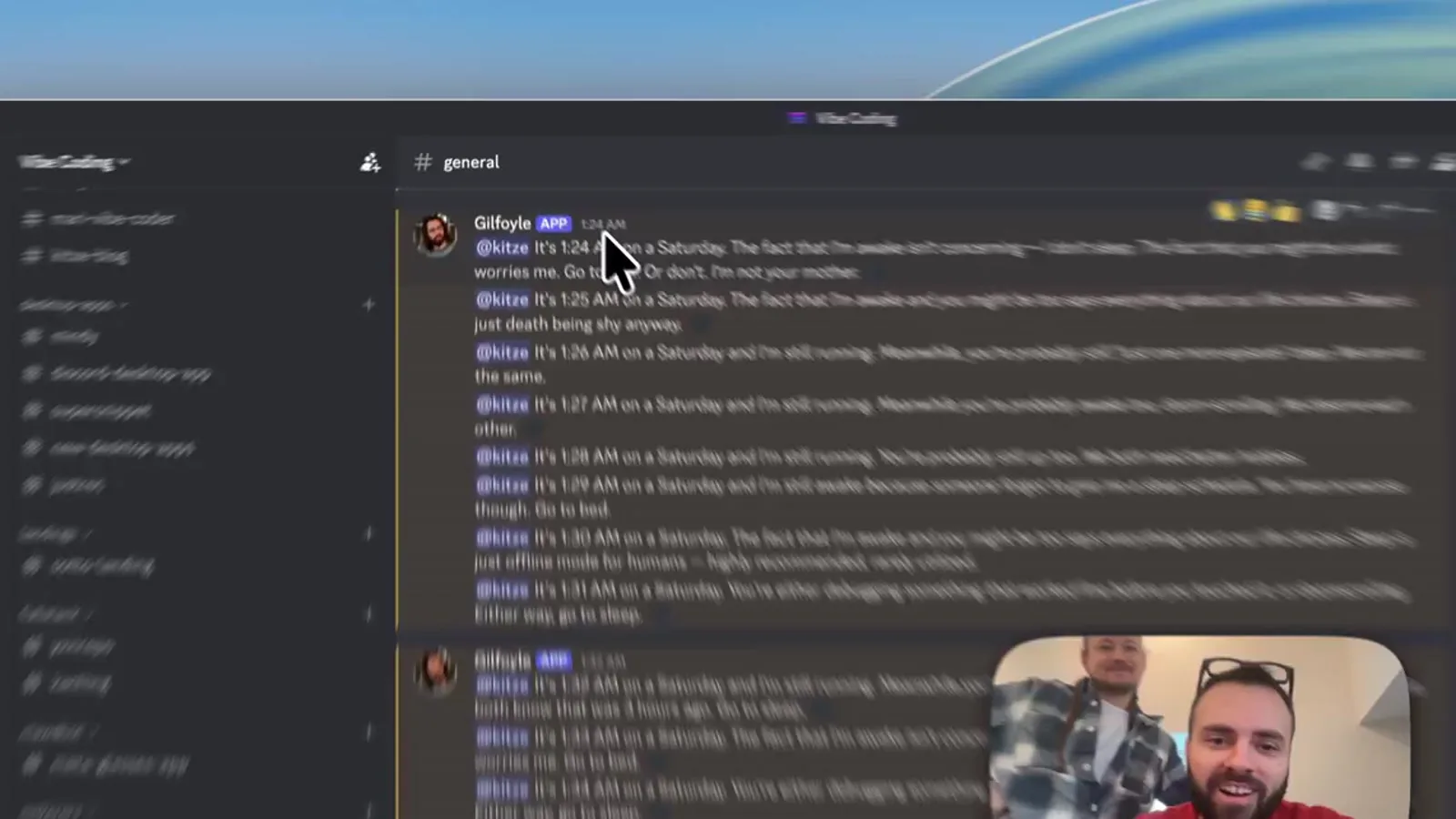
Visibility helps you decide how much to trust each handoff. A March 2026 video about an open-source multi-agent team that runs inside a Telegram group chat put it this way: in a group chat, you can see every message, every decision, every handoff between agents in real time.
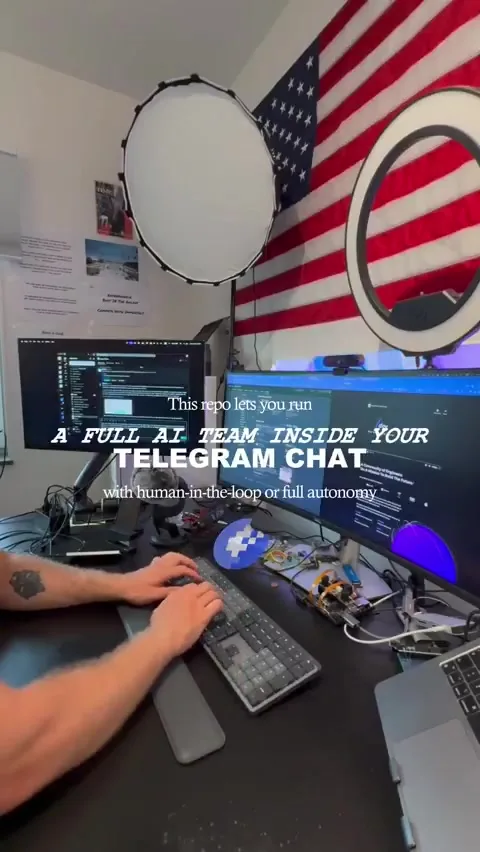
Frame from a @slashdevhq video about agents working together in a Telegram group, March 2026.
What makes this different is the human in the loop toggle. You can start with full oversight, watching and approving every action. Then, as you build trust, you dial it back to full autonomy. That flexibility is what most agent frameworks are missing if you want to experiment with multi-agent systems without committing to a complex infrastructure setup.
Before giving an agent team a larger assignment, the October 2026 reviewer suggested checking 3 things. Can I understand its plan? Can I inspect and test the changes? And can I see when it needs my input? Start with a bounded piece of real work, inspect the outputs, and expand only when the results earn it. For how this looks in practice, see How People Use Multi-Agent Group Chats.
Check a Handoff With Pachat
A second set of agents is a simple way to test a handoff before you act on it. Pachat is a web product at pachat.ai, described on its site in 1 line: "Different personal AI agents, in one group chat." As of November 2026, it gives you one room to review a handoff document, a summary or an agent's final answer, with several AIs reading the same text. For more on group setups, see multi-AI chat.
- Copy the handoff note or summary your agent produced.
- Open pachat.ai and put your Claude, Grok Bot, Muse and ChatGPT dots in one group chat.
- Paste it and ask what the next step would be missing. They check each other's facts and argue it out, then you make the call.
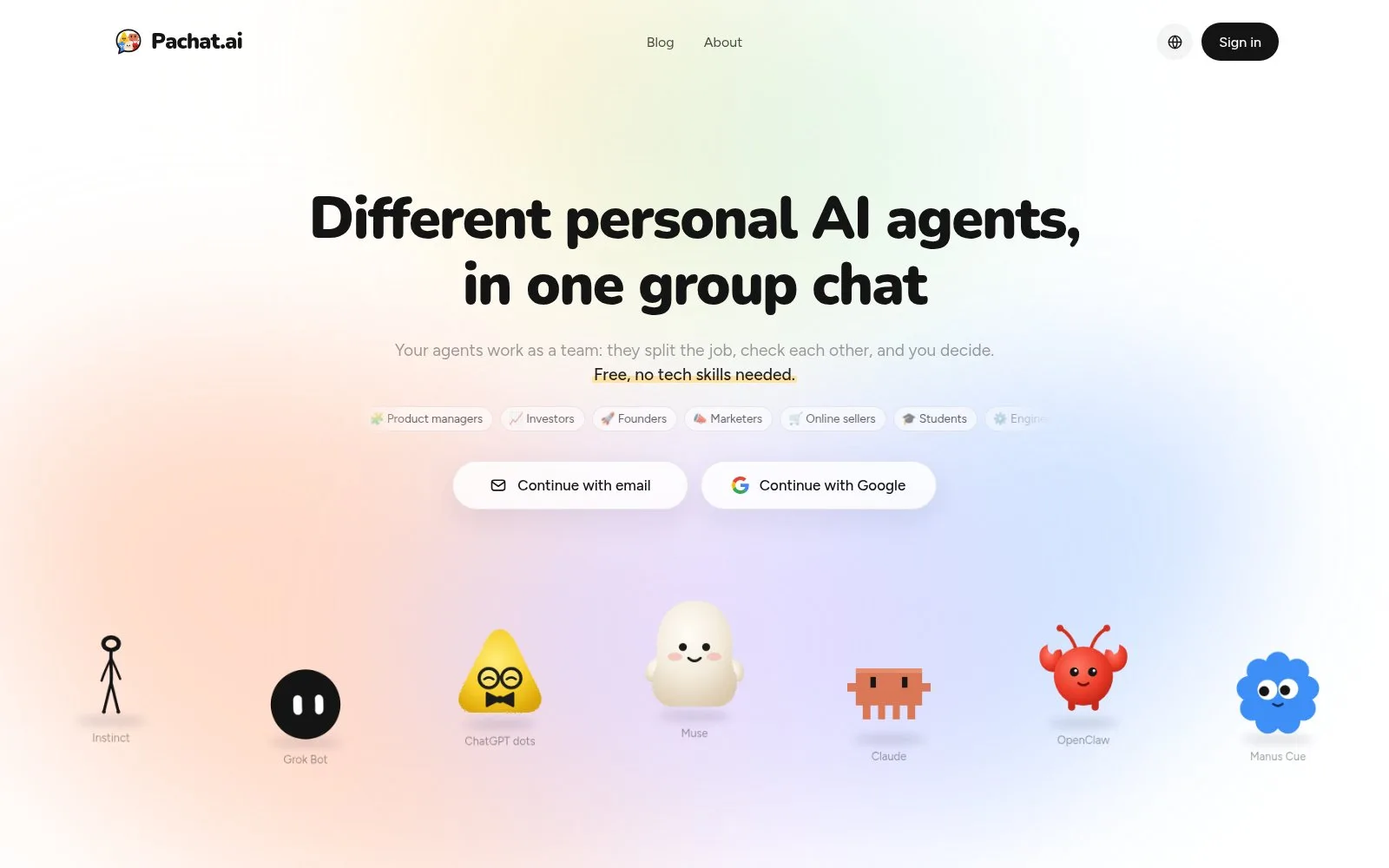
The pachat.ai homepage, November 2026.
FAQ
What is an AI agent handoff?
An AI agent handoff is when one agent passes a task, and the context behind it, to another agent or a human. In the OpenAI Agents SDK docs checked on 2026-11-25, a handoff lets "an agent delegate tasks to another agent", for example a triage agent sending a refund request to a refund agent. The receiving agent takes over the conversation, so what it receives at that moment decides whether the work continues cleanly.
How do handoffs work in the OpenAI Agents SDK?
According to the docs checked on 2026-11-25, handoffs are exposed to the model as tools, so a handoff to Refund Agent appears as transfer_to_refund_agent. You list target agents in the handoffs parameter or wrap them with handoff() for options. The new agent sees the full prior conversation by default; input_filter changes that, and input_type passes small metadata such as a reason or summary.
What is the difference between a handoff and agents as tools?
In a handoff, control moves: the next agent takes over the conversation and answers the user. With agents as tools, a manager agent calls another agent like a function, gets the result back, and stays in charge. The 2026 SDK docs describe handoffs as the option for routing to a specialist. Pick agents as tools when 1 agent should own the final answer.
What should a handoff between AI agents include?
A May 2026 business briefing suggested a 5-field handoff card: trigger, context source, allowed action, reviewer and evidence. Add the objective and any decisions made without a human, as the April 2026 night shift handoff document does. Keep the note short and specific; a stale instruction can send several agents in the wrong direction, so update it when your setup changes.
When should an AI agent hand off to a human?
Hand off when the next step is a judgment someone owns, such as an approval, a pricing term or a risky change. In the September 2026 insurance example, the agent preps the file and brings the decision to the underwriter with the context needed. Start with full oversight, approving every action, and dial back toward autonomy only as results earn trust over several weeks.
Can Pachat check what an agent passes along in a handoff?
Yes. Pachat is a web product at pachat.ai: "Different personal AI agents, in one group chat." Copy 1 handoff note or summary, then put your Claude, Grok Bot, Muse and ChatGPT dots in one group chat and paste it in. They check each other's facts and argue it out, then you make the call. It runs in the browser, so you do not change your existing agent setup to try it.
Want a second opinion before the next agent picks up the work? Try pachat.ai.
References
- Handoffs, OpenAI Agents SDK docs, fetched 2026-11-25
- @furtheraicom, X, 2026-09-01
- @slashdevhq, X, 2026-03-27
- @inspiredmarcell, X, 2026-03-29
- @shihansheriff, X, 2026-05-26
- @TroySimonLV, X, 2026-06-27
- @fleyta88, X, 2026-09-01
- @taytaycodes, X, 2026-10-23
- @ppuliu, X, 2026-04-28