 Pachat.ai
Multi AI Chat: Why Ask Several AIs at Once
Updated 2026-11
TL;DR: Multi AI chat means asking more than one AI the same question and comparing what comes back. Disagreement tells you where to dig deeper, and agreement raises your confidence. You can do it with three browser tabs, a multi-model tool, or a group chat where your AI agents check each other.
You've got ChatGPT, Claude and Gemini all claiming to be the best. And if you're not a tech person, it's just noise.
What is multi AI chat?
Multi AI chat is the habit of sending one question to several AI assistants, such as ChatGPT, Claude and Gemini, and reading the answers side by side. In 2026 it works in 3 ways: browser tabs you manage yourself, one tool that runs the models for you, or a group chat where the assistants talk to each other. All 3 answer the same worry, that no single AI has the final answer.
Three lessons from running AI models against each other. When you ask multiple AIs the same question, patterns emerge.
The question used to be which AI model is the best, but that question is becoming less and less useful because the answer keeps changing depending on the task.
Every single AI model has blind spots. Using several of them is how you find those blind spots before they cost you.
Different AIs give different answers
An answer gap is a difference in assumptions, reasoning or facts between two models that received the identical prompt. In 2026 the gap shows up even on a single everyday question, which is why one reply should never be treated as the final word. The gap is useful, because it shows what each model quietly took for granted and where you should look twice.
Number 1, different AIs give different answers. Constantly open ChatGPT. Claude and Gemini in 3 tabs ask the same question in all three, compare the responses side by side. You'll see different assumptions, different reasoning and sometimes different facts. This teaches you that no single AI has the final answer.
Fair comparisons start with a fair setup:
Same prompts, same tasks, same judge.
And a different answer is not always a worse one:
They all give you different insights, and you get to compare all of the insights.
Gemini can be brilliant on one prompt and surprisingly average on the next.
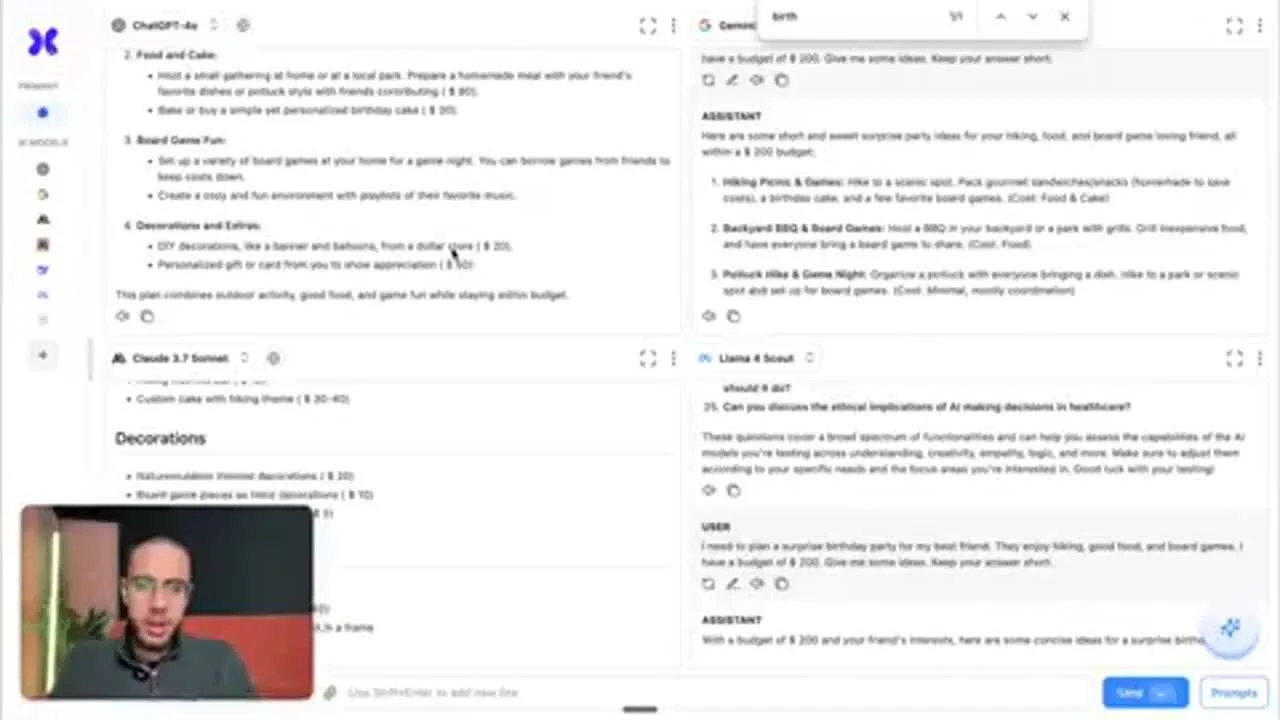
Frame from a video comparing several AI models on one prompt, April 2026.
When they agree, confidence goes up
A cross check is a second or third independent answer to the same question, used to confirm the first. When several assistants reach a similar answer, you can trust it more, and in a 2026 workflow that costs you just 1 extra paste per tab. The same check catches hallucinations before you act on them, and it works for work questions, travel plans and everyday research alike.
No. 2, when all three agree, confidence goes up. Run your important questions through multiple AIs. If ChatGPT, Claude, and Gemini all give similar answers, you can trust it more. This simple cross check catches hallucinations and gives you more reliable information.
Disagreement is just as valuable:
When all three models land on the same answer, you can move fast with confidence. When they disagree, that's your signal to slow down and dig deeper before acting on anything.
That disagreement is actually incredibly valuable because it tells you the question is more complex than it looks, or the data is uncertain, or there's genuine ambiguity that one answer can't capture.
Each model has a style
A model style is the way an assistant tends to answer: how careful it is, how direct, how short. It is one tester's rule of thumb from 2026, not a verified fact, and it can shift with every new release. Treat it as a first guess, then test it on 3 or 4 of your own questions before you rely on it.
Number 3. And this is the one nobody's using yet. Each model has a style. Claude is careful and detailed. ChatGPT is direct and practical. Gemini is concise and factual. Match your question to the model's strength. Use Claude for nuance. Use ChatGPT for action. Use Gemini for summaries.
The takeaway is simple:
No single AI is best for everything. The people getting great results use multiple models and compare.
Open three tabs, ask one question, see what differs.
Frame from a short video on comparing AI models, March 2026.
From three tabs to Model Council and LLM Council
Model Council is a Perplexity feature, launched in February 2026, that runs one query across several models at once. A separate synthesizer model reviews the answers and returns one result showing where the models agree, where they disagree and what only one of them found. LLM Council, a weekend project Andrej Karpathy shared in November 2025, works in 3 stages: first opinions, anonymised peer review, then a Chairman model writes the final answer.
Before tools like these, the manual routine looked like this:
If you wanted a second opinion from a different model, you had to open a new tab, copy your prompt, paste it in, wait, and manually compare the two answers yourself. That's a workflow killer.
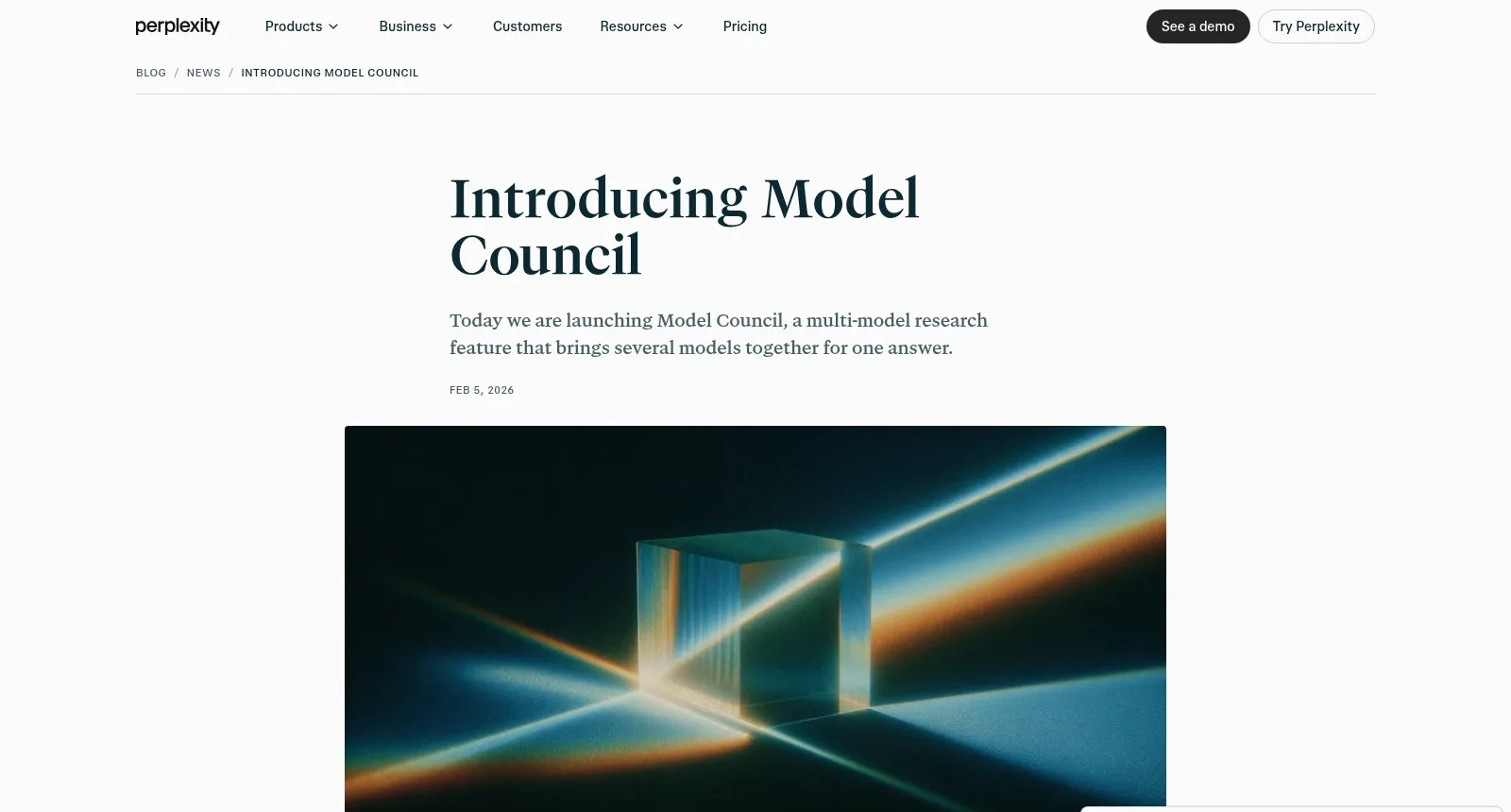
Screenshot: Perplexity's Model Council announcement, February 2026.
Here is how the one-step version works:
Then a synthesizer model comes in, reviews all three outputs, finds where they agree, flags where they disagree, and puts together one clean, structured answer for you.
Instead of hoping one model has it right, you triangulate three independent systems cross checking each other.
You ask once you get the synthesized result and you can see exactly where the confidence is high and where it is not.
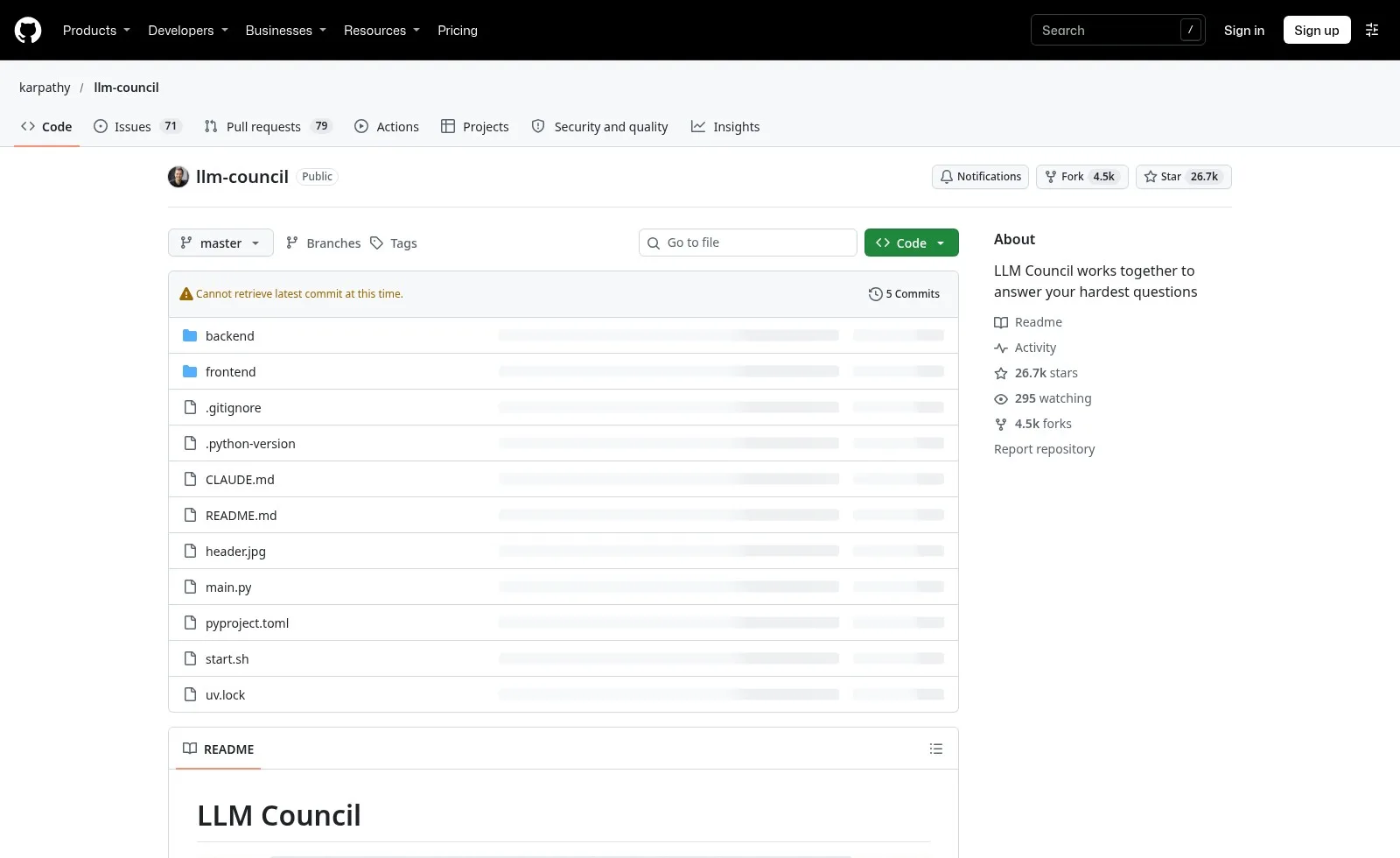
Screenshot: the karpathy/llm-council repository on GitHub, November 2026.
A second opinion from another agent
A second-opinion workflow is when one AI agent does the work and a different agent reviews it with the same project context. In 2026 developers use this pattern between coding agents such as Claude Code and Codex, and the idea that matters is the hand-off, not any single tool. The reviewer starts from the same facts and brings a fresh pair of eyes.
Say you're starting in Claude Code with a real payment problem. The payment provider can go silent even when the charge actually succeeded. Charge again and the customer pays twice. You ask Claude to make this flow production safe.
So far, this is just a normal Claude Code session. But now it's time to get the second opinion.
Codex opens in the same project with all the context. No copy, paste, no explaining what Claude did. You just ask Codex to take a critical look and Codex finds a real problem.
Claude now knows what happened in Codex. You ask what it thinks. It knows the issue, the fix, and the reasoning. It admits Codex caught a real flaw.
Two agents, one project, and a second pair of eyes on the same problem.
Multi AI chat in Pachat: steps
Pachat is a web product at pachat.ai, described on its site as "Different personal AI agents, in one group chat." Instead of juggling tabs, the group chat is where your agents meet. Official wording: "Put your Claude, Grok Bot, Muse and ChatGPT dots in one group chat. They check each other's facts and argue it out, then you make the call."
- Open pachat.ai.
- Put your Claude, Grok Bot, Muse and ChatGPT dots in one group chat.
- Ask your question once, in the group chat.
- Let them check each other's facts and argue it out.
- Then you make the call.
For a walkthrough of the product, read the AI group chat guide, and for the building blocks behind it, see what is an AI agent and Claude Code agent teams.
FAQ
What is multi AI chat?
Multi AI chat means asking several AI assistants the same question and comparing their answers instead of trusting a single reply. In 2026 you can do it by hand with three browser tabs for ChatGPT, Claude and Gemini, with a tool that runs several models at once, or in a group chat where different agents talk to each other. The goal is the same each time: spot differences, confirm agreement and make a better decision.
Why do different AIs give different answers to the same question?
Different models make different assumptions, follow different reasoning and sometimes recall different facts, so the same prompt can produce 2 or 3 distinct answers. One 2026 tester found that comparing them side by side is where the value comes from, because each reply surfaces something the others missed. A gap between answers is a signal to read more closely, not proof that one model is broken.
Does agreement between AIs prove an answer is right?
No. Agreement raises your confidence, but it does not prove an answer is correct. When ChatGPT, Claude and Gemini all give similar answers, a cross check makes a hallucination less likely, yet important facts such as numbers, dates and product features still deserve a look at the original source or official documentation. Use agreement to decide how fast to move, and use disagreement as a prompt to slow down in 2026 and beyond.
Which AI is best for which kind of question?
There is no verified ranking. One 2026 rule of thumb says Claude suits nuance, ChatGPT suits action and Gemini suits summaries, but it is a personal observation and models change with every release. Test 3 or 4 of your own questions across the assistants you use, note which style you prefer for each task, and keep comparing. No single AI is best for everything.
What are Model Council and LLM Council?
Model Council is a Perplexity feature launched in February 2026 that runs one query across several models and has a separate synthesizer model combine the answers, showing where they converge and disagree. LLM Council is Andrej Karpathy's open source project from November 2025, which collects first opinions from several models, has them review each other anonymously, and lets a Chairman model write the final answer.
How do I compare AI answers without any extra tool?
Open ChatGPT, Claude and Gemini in 3 tabs, paste the same prompt into each, and read the responses side by side. Look for differences in assumptions, reasoning and facts, then note where all three agree. It takes a few minutes in 2026 and needs no setup. When one answer disagrees with the rest, ask the assistants to explain why before you act on any of them.
How does Pachat fit into a multi AI chat?
Pachat puts different personal AI agents in one group chat, so you do not need to juggle tabs. According to pachat.ai, you put your Claude, Grok Bot, Muse and ChatGPT dots in one group chat, they check each other's facts and argue it out, and then you make the call. Start at pachat.ai to see it in 2026.
Try Pachat
Put your AI agents in one group chat at pachat.ai.