 Pachat.ai

Claude Code Alternatives: 6 Coding Agents Worth Trying
Updated 2026-11
TL;DR: The main Claude Code alternatives in 2026 are OpenAI Codex, the open source OpenCode, and DeepSeek Harness, an MIT licensed agent harness released in August 2026. Platforms like Blackbox let you run several agents on the same task and pick the best result. Choose by workflow: terminal and scripting, a desktop app that drives other apps, or an open stack you control.
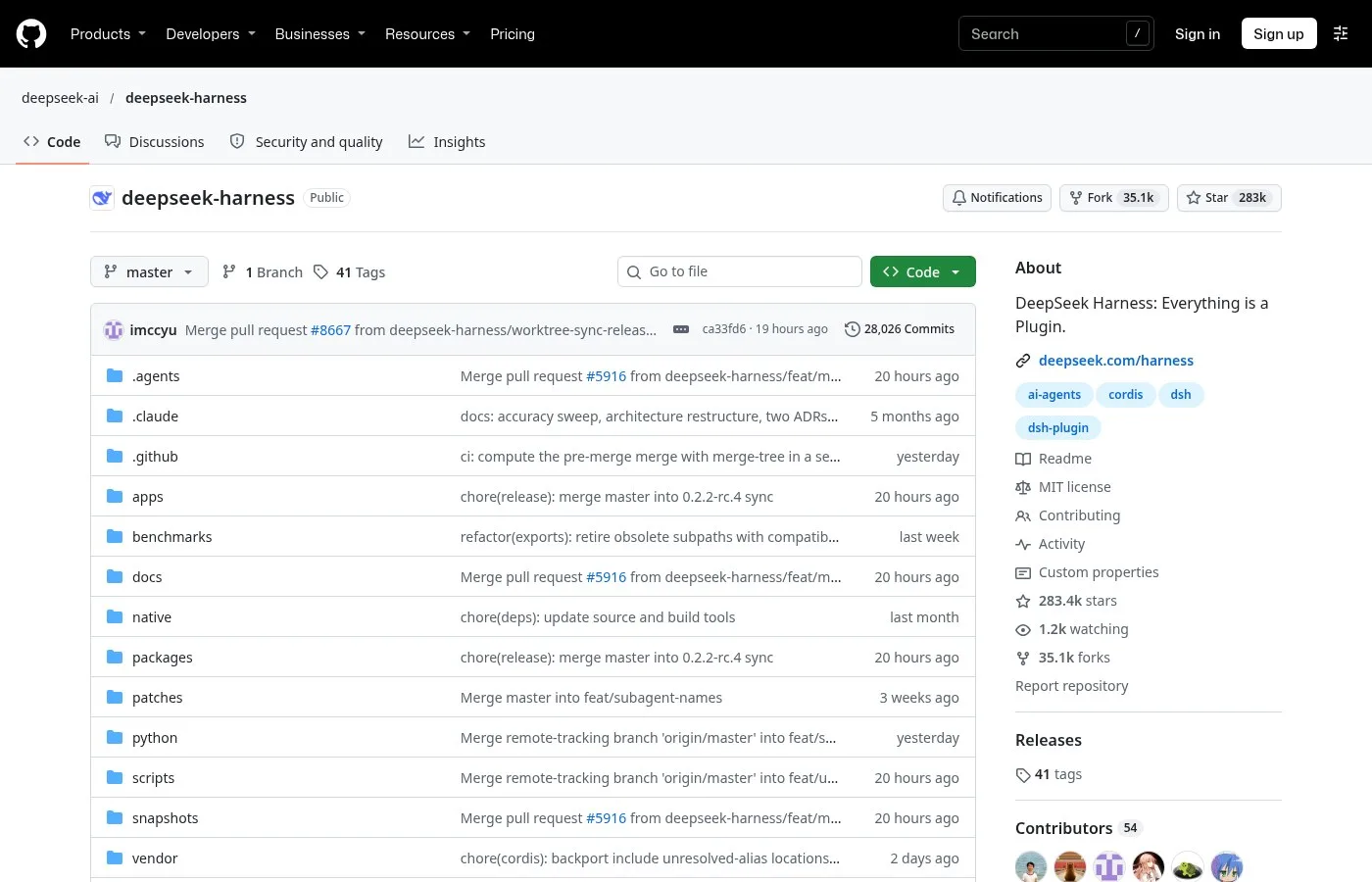
Screenshot of the DeepSeek Harness repository on GitHub.
What Are Claude Code Alternatives?
Claude Code alternatives are other AI coding agents that read your repo, edit files and run commands for you, the same core job Claude Code does. In 2026 the field includes closed tools from other labs, like OpenAI Codex, and open source agents, like OpenCode and DeepSeek Harness, that let you plug in many different models instead of one vendor.
Claude Code or Codex? Wrong question. Here's what each one really does.
Both are coding agents. Both read your repo, edit files, run commands, and connect to outside tools through MCP.
The limits are the same for both. They can be confidently wrong and they are only as good as the tests and instructions you give them.
So choose by workflow, not hype.
How to Choose a Claude Code Alternative
Choosing a Claude Code alternative is mostly a question of where you like to work. As of November 2026, Claude Code leans into the terminal, while Codex leans into a desktop app and open source tools lean into model choice. The simple test is to run 1 real task from your own project in two agents and compare. The right answer for you may differ from a friend's.
As of November 2026, Claude Code leans into the terminal with subagents, hooks, plugins and scheduled routines. Codex leans into a desktop app. It can operate other apps on your computer, has a built in browser and runs tasks in cloud environments.
Live in the terminal and want to script it? Start with Claude Code. Want an agent that also drives apps and a browser? Start with Codex.
Not sure? Run one real task in both.
1. OpenAI Codex
Codex is OpenAI's coding agent and the most common Claude Code alternative in 2026. It runs in the terminal, in IDEs, in a desktop app and in the cloud, and you sign in with your ChatGPT account. Many developers who tried both tools in 2025 said the GPT-5 models in Codex gave them the cleanest code they had seen. It is the easiest switch for most teams.
Everybody's saying GPT-5 in Codex is better than Claude, and many agree.
This combo comes with a strong claim: a developer who has used every AI coding tool under the sun says this specific combo produces the highest quality code they have ever seen.
The plan is to use ChatGPT 5 Pro to design the architecture for you, then set up Codex with the proper configuration and MCP tools to one shot your MVP.
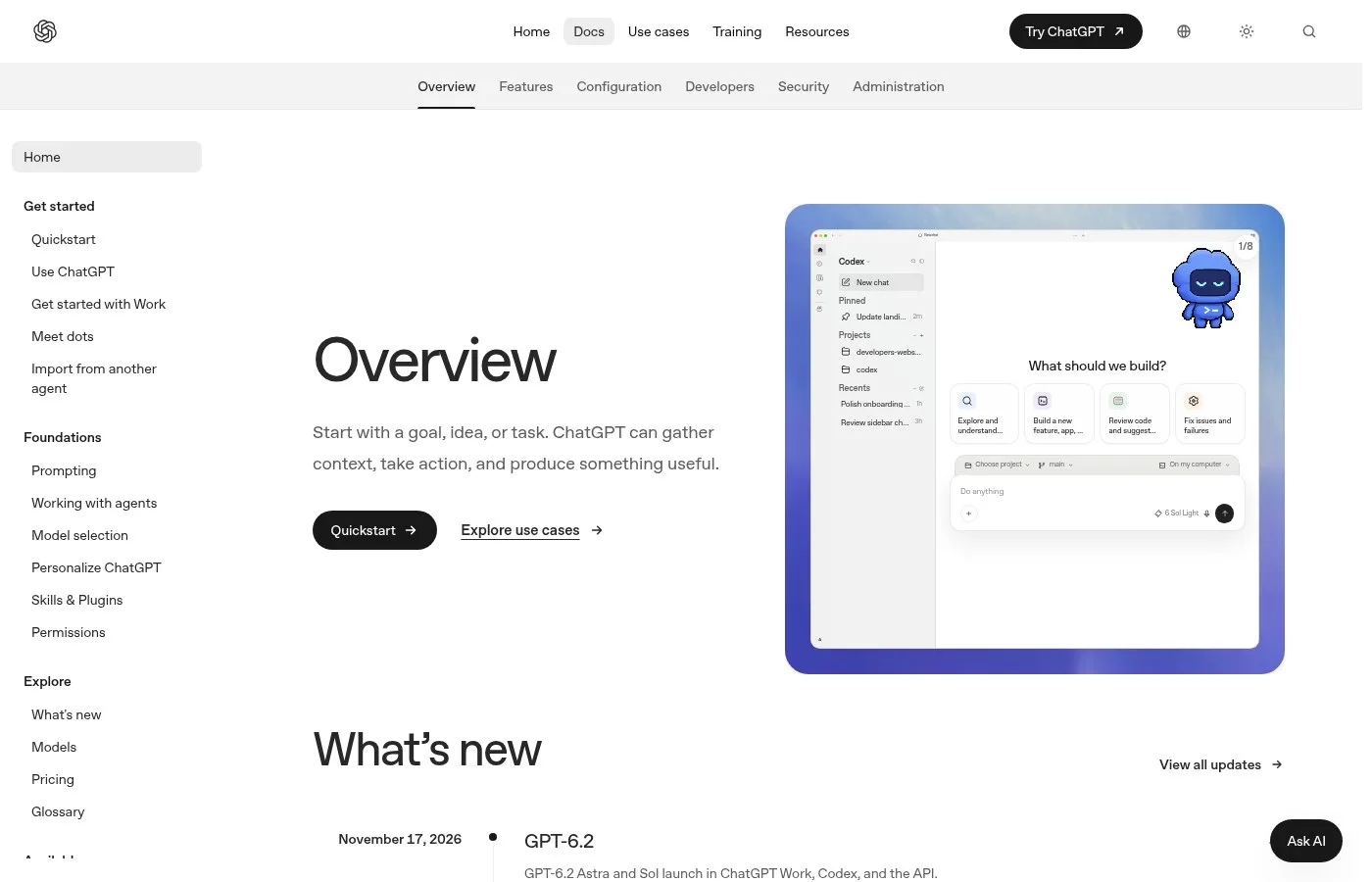
Screenshot of the Codex page on the OpenAI developers site.
2. OpenCode
OpenCode is an open source coding agent that runs in the terminal, as a desktop app or in the browser. As of November 2026 its docs say it has built-in support for many LLM providers, which you connect with the /connect command. That makes it a common pick for people who want Claude Code's style of work with any model.
OpenCode is the hottest new terminal AI coding agent, similar to tools like Aider, Codex and Claude Code, but this supports more than 75 models, has multi session and MCP support and is completely open source.
The first thing you'll notice about OpenCode is its beautiful terminal UI, as well as its intuitive model selection, and it has the option to use local models if you want to vibe code offline.
Use /init in a project's directory to create or update an AGENTS.md file to use as context for your prompts, just like a CLAUDE.md file. OpenCode will automatically detect LSP servers to improve how the LLM interacts with your code.
Not to mention multi session support, which is a killer feature, because there's nothing worse than accidentally closing Claude Code and losing your whole conversation context.
The OpenCode terminal interface during a hands-on review.
3. DeepSeek Harness
DeepSeek Harness is an open source agent harness that DeepSeek released on August 13, 2026 under the MIT license. Its idea is that everything is a plugin: the model, the tools, the sessions and the agent loop can all be swapped. The repository calls it a developer preview and warns that breaking changes will come. Treat it as a tool to test, not to bet on yet.
DeepSeek launched DeepSeek Harness, and while it works like an AI agent framework, which is similar to Claude Code, it is open source and modular.
Claude Code locks you into Anthropic's closed system. DeepSeek Harness gives you open source control over your models, file tools, and execution loops.
And the best part is that if you still prefer using Claude Code, you don't have to choose, because DeepSeek Harness actually lets you call in Claude Code inside of it as a subagent plugin.
It reads and edits your files, runs commands, makes a plan, hands work off to helpers. And here is the part that makes it actually different. Everything is a plugin. Tools, skills, even the interface.
One catch, it's a developer preview. It runs real commands on your machine. So keep backups and use a container.
4. Run Several Coding Agents on One Task
A multi agent platform is a service that sends the same coding task to several agents at once and lets you compare their work. Blackbox showed one in January 2026 that runs the official agents from different labs, including Claude Code, Codex, Gemini, Mistral Vibe, OpenCode, Qwen Code and Amp, from a single account. You then keep the best result.
These are all official agents that you have access to with a single profile. It's not the models. It's the official latest published agent from those organizations.
So you can give them coding tasks on specific code bases. You can review their implementation individually, go into each one of them, you can review their diff as they're currently working on those tasks.
And you have also a judge layer that is going to come once everything is done and select for you the best implementation based on the task that you've selected.
You can take the judge, raise the PR from what was recommended and merge that PR if this is what you were looking for.
5. Run Any CLI Agent From Your Browser
A web terminal for agents is a tool that turns command line agents like Codex or Claude Code into browser tabs. One developer built such a tool in November 2025 so that every session is a tab, sessions keep running on a server, and a phone can connect to the same agents. It is a way to use several agents without picking only 1.
What if you could run CLI agents in your browser?
You can launch any CLI apps and agents just like visiting a website. Each session is a browser tab, which means you can multitask as much as you want. If something runs in a terminal, it runs on the web automatically.
Out of the box, you get desktop push notifications for any CLI apps and any CLI agents. Now you can just kick off an agent task and forget about it. They will literally message you when done.
By running the CLI through a server, you can connect from as many clients as you want. For example, a phone.
Compare Claude Code Alternatives With Pachat
Pachat is a web product at pachat.ai, described on the site as "Different personal AI agents, in one group chat." It does not replace a coding agent, but it is a good place to compare plans and answers from different AIs before you commit to one tool.
- Run the same task in Claude Code and one alternative, and copy each plan or diff summary.
- Open pachat.ai and put your Claude, Grok Bot, Muse and ChatGPT dots in one group chat.
- Paste both and ask which is safer to merge. They check each other's facts and argue it out, then you make the call.
For more on coding agents, read how to use Claude Code, how to use Codex and the guide to Cursor background agents.
FAQ
What is the best Claude Code alternative?
It depends on your workflow. As of November 2026, OpenAI Codex is the closest all-round alternative, with a terminal tool, desktop app and cloud tasks. OpenCode suits people who want an open source terminal agent with many model providers. DeepSeek Harness, released on August 13, 2026, suits teams that want an open, plugin-based agent stack.
Is there an open source alternative to Claude Code?
Yes. OpenCode is an open source coding agent you can run in the terminal, as a desktop app or on the web, and it connects to many model providers. DeepSeek Harness is MIT licensed and open source too, but its repository marks it as a developer preview in 2026, so expect breaking changes and run it in a container.
Can I use Claude Code and an alternative together?
Yes. DeepSeek Harness can mount Claude Code and Codex as subagent providers, so it can act as an outer shell that hands jobs to them. Platforms like Blackbox, shown in January 2026, run Claude Code, Codex and other agents on the same task and use a judge step to recommend the best result.
Is Codex better than Claude Code?
Neither wins every task. Both read your repo, edit files, run commands and use MCP tools. In 2026 Claude Code is stronger in the terminal with subagents, hooks and plugins, while Codex adds a desktop app that can operate other apps and run cloud tasks. The best test is to run 1 real task from your project in both.
Are Claude Code alternatives safe to run on my computer?
They run real commands, so treat them with care. Keep backups, review diffs before merging, and use a container for preview tools like DeepSeek Harness, whose 2026 repository warns about breaking changes. Coding agents can be confidently wrong, and they are only as good as the tests and instructions you give them.
Can Pachat help me choose a coding agent?
Yes. Pachat is a web product at pachat.ai where you put your Claude, Grok Bot, Muse and ChatGPT dots in one group chat. Paste the plans or results from 2 coding agents and ask which one to trust. They check each other's facts and argue it out, then you make the call.
Ready to put different AIs in one group chat? Start at pachat.ai.
References
- DeepSeek, "DeepSeek Harness" on GitHub, fetched 2026-11-18: https://github.com/deepseek-ai/deepseek-harness
- VentureBeat, "DeepSeek Harness launches as open source rival to Claude Code," 2026-08-13: https://venturebeat.com/technology/deepseek-harness-launches-as-open-source-rival-to-claude-code-alongside-v4-pro-on-api-with-higher-prices
- OpenCode Docs, "Intro," fetched 2026-11-18: https://opencode.ai/docs/
- OpenAI Developers, "Codex," fetched 2026-11-18: https://developers.openai.com/codex
- @BetterStackHQ, 2025-06-25: https://x.com/BetterStackHQ/status/1937834740440023306
- @KingBootoshi, 2025-09-02: https://x.com/KingBootoshi/status/1962923494691479620
- @cocktailpeanut, 2025-11-05: https://x.com/cocktailpeanut/status/1986103926924390576
- @blackboxai, 2026-01-31: https://x.com/blackboxai/status/2017418722101928212
- @Hostinger, 2026-09-08: https://x.com/Hostinger/status/2097341366653100510
- @akashsairaja, 2026-11-08: https://x.com/akashsairaja/status/2119452194240164254
- @bsalchhetri, 2026-11-18: https://x.com/bsalchhetri/status/2122881820991844638